
What is hypertension?
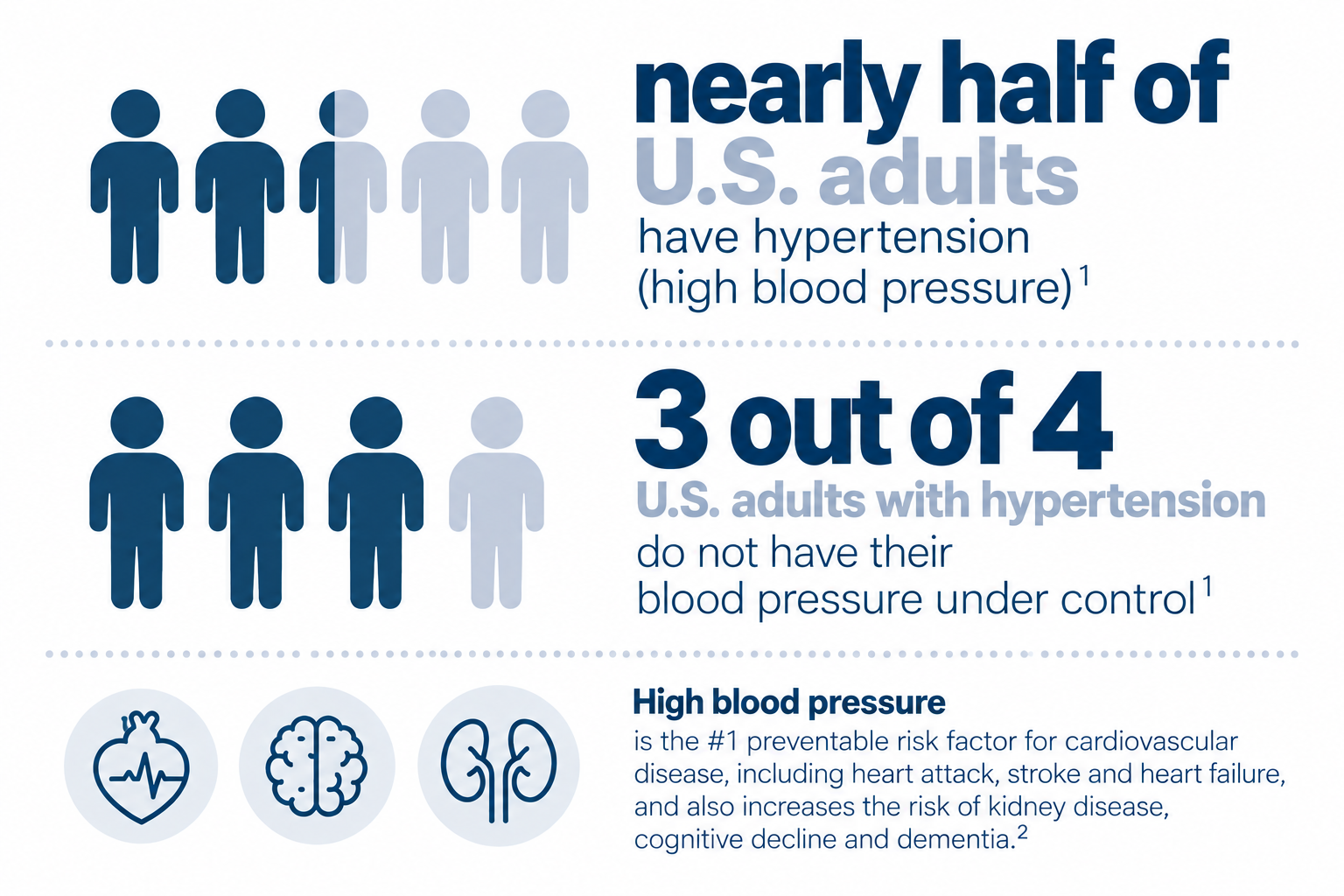
Hypertension, or high blood pressure, is a condition in which the force of blood flowing through a person’s blood vessels is consistently too high. Over time, this puts stress on the arteries, the heart and the kidneys, which increases the risk of heart attack and stroke.1

High blood pressure
Normal blood pressure is <120/80 mmHg. An average blood pressure of 130/80 mmHg or higher is considered high blood pressure.2 Depending upon your age and health status, your physician will help you identify the target blood pressure that is optimal for you.

Managing high blood pressure
Appropriate lifestyle changes are the cornerstone for the prevention of hypertension and are also important for its treatment. If your blood pressure remains higher than 130/80 mmHg despite appropriate lifestyle changes, your physician may recommend antihypertensive medications based on your blood pressure level, cardiovascular risk and other health factors.2
A growing area of research
For patients unable to effectively control their blood pressure with lifestyle changes and medication therapy, a new class of interventional products have been developed for the treatment of hypertension using a procedure called renal denervation.3, 4 The 2023 European Society of Hypertension guidelines were modified to recognize the effectiveness and safety of renal denervation.5 Renal denervation is also recognized as a treatment option that is additive or alternative to increasing medication in patients with uncontrolled resistant hypertension who do not have a secondary cause of hypertension.6
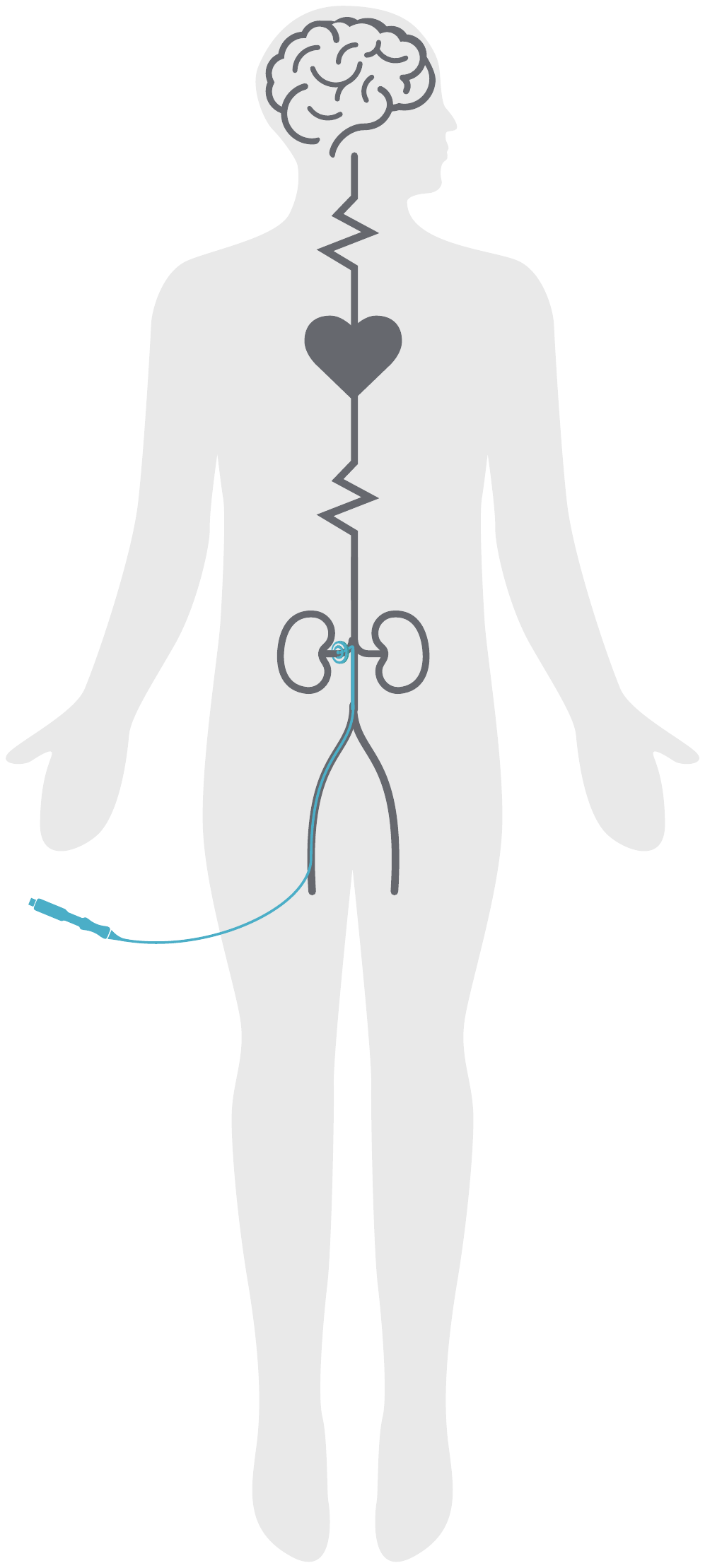
This alcohol-mediated renal denervation procedure has the objective of ablating these sympathetic nerves in order to reduce their overactivity. The overactive sympathetic nervous system may play a role not only in hypertension, but also in heart failure, kidney disease, metabolic syndrome and sleep apnea.7, 8
The ASI Clinical Trial program is investigating Dehydrated Alcohol Injection, USP administered using the Peregrine System™ Infusion Catheter to assess the efficacy and safety of alcohol-mediated renal denervation procedure to treat uncontrolled hypertension.
For complete trial details, select the logo below to visit ClinicalTrials.gov.
Reference Organizations
These resources contain additional information about high blood pressure. These links are provided for educational and informational purposes only.
They will take you to external websites and do not constitute medical advice from our organization.



References
1 United States National Institutes of Health (NIH) National Heart, Lung, and Blood Institute; https://www.nhlbi.nih.gov
2 Jones, D, Ferdinand, K, Taler, S. et al. 2025 AHA/ACC/AANP/AAPA/ABC/ACCP/ACPM/AGS/AMA/ASPC/NMA/PCNA/SGIM Guideline for the Prevention, Detection, Evaluation, and Management of High Blood Pressure in Adults: A Report of the American College of Cardiology/American Heart Association Joint Committee on Clinical Practice Guidelines. JACC. 2025 Nov, 86 (18) 1567–1678. doi: 10.1016/j.jacc.2025.05.007
3 Schmieder et al, European Society of Hypertension Position Paper on Renal Denervation 2018, Journal of Hypertension 2018 Oct;36(10):2042-2048; doi: 10.1097/HJH.0000000000001858
4 Mahfoud et al, Proceedings from the 2nd European Consensus Conference for device-based therapies for hypertension: state of the art and considerations for the future, European Heart Journal (2018) 0,1-6. doi:10.1093/eurheartj/ehy584
5 Grassi G. Devices-based treatment of hypertension: the position of the European Society of Hypertension (ESH) 2023 guidelines. Expert Rev Med Devices. 2024;21(4):265-267. doi: 10.1080/17434440.2024.2339414
6 Mancia G, Kreutz R, Brunstrӧm M, et al. 2023 ESH guidelines for the management of arterial hypertension the task force for the management of arterial hypertension of the European Society of Hypertension: Endorsed by the International Society of Hypertension (ISH) and the European Renal Association (ERA). J Hypertens. 2023;41(12):1874-2071. doi: 10.1097/HJH.0000000000003480
7 Mahfoud et al, Catheter-based renal denervation in hypertension: heading for new shores, J Hypertension 2018 January; 36(1): 41-42; doi: 10.1097/HJH.0000000000001614
8 Fisher et al, Central Sympathetic Overactivity: Maladies and Mechanisms, Auton Neurosci. 2009 June 15; 148(1-2): 5–15. doi:10.1016/j.autneu.2009.02.003