
Peregrine System™ Infusion Catheter
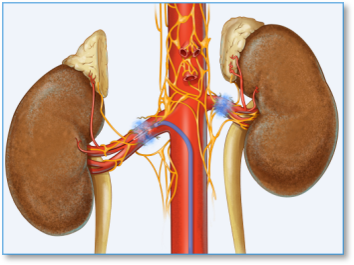
The Peregrine System™ Infusion Catheter uses proprietary, patented technology to deliver diagnostic and therapeutic agents into the perivascular space of renal arteries to ablate the sympathetic nerve fibers in the adventitial layer, and along the axis of the renal artery. The neurolytic effect on the renal sympathetic nerves results in a lowering of the patient’s blood pressure.
The Peregrine Catheter 4-7 mm is intended for use in vessels having an inner diameter of 4-7 mm and the Peregrine Catheter 3-4 mm is intended for use in vessels having an inner diameter of 3-4 mm.
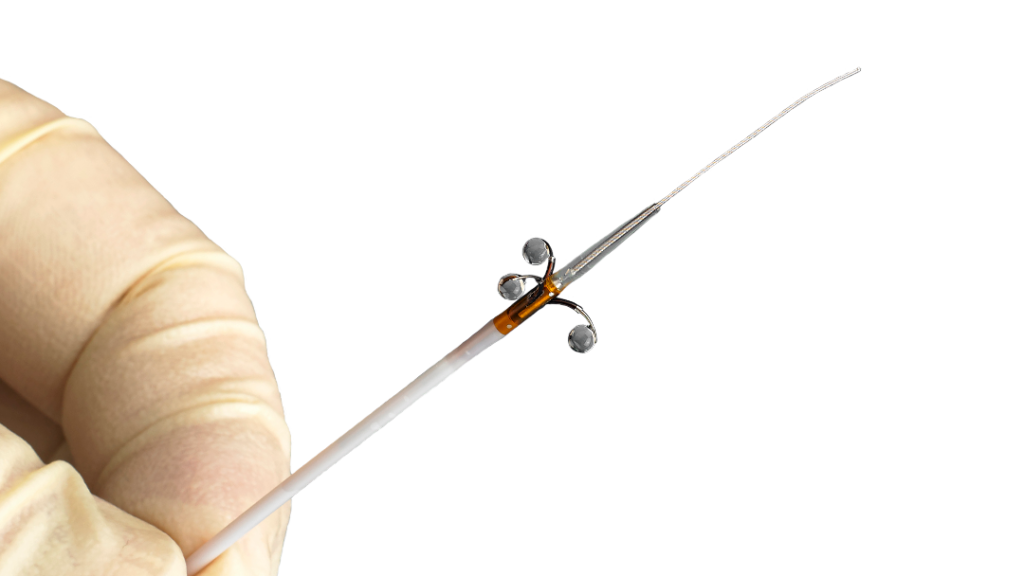
Targeted Perivascular Delivery of Solutions
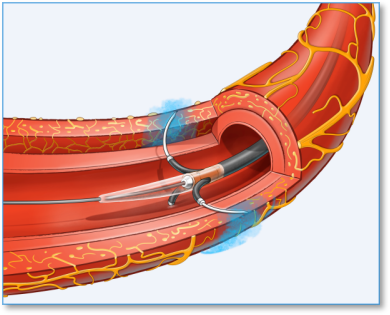
The Peregrine SystemTM Infusion Catheter features three guided microneedles for targeted infusion of a neurolytic agent (such as alcohol). The catheter is delivered into the femoral artery utilizing techniques, similar to coronary or peripheral catheterization. During catheter placement, the microneedles remain retracted within radiopaque guide tubes, enabling fluoroscopic confirmation of catheter positioning and apposition of the guide tubes prior to delivery of the diagnostic or therapeutic solution. Once positioning and apposition has been confirmed, all three microneedles are deployed simultaneously for targeted delivery of the neurolytic agent directly into the perivascular space.
Performance Information
The Peregrine SystemTM Infusion Catheter has been the subject of several clinical studies, including 3 open label studies and two randomized controlled studies. Collectively, these studies showed that the Peregrine Catheter, when used in combination with a neurolytic agent, can reduce blood pressure in hypertensive patients. The following published results from the two randomized controlled studies, Target BP OFF-MED and Target BP I, are summarized below.
The 1-year study results from the randomized, blinded, sham-controlled, proof-of-concept, TARGET BP OFF-MED study showed at 8 weeks post-procedure, a mean (±SD) 24-hour systolic BP change of -2.9 ± 7.4 mmHg (p=0.009) versus -1.4 ± 8.6 mmHg (p=0.25) in the treatment and sham groups, respectively (mean between group difference: 1.5 mmHg; p=0.27). 1 There were no differences in safety events between groups. After 12 months of blinded follow-up, with medication escalation, patients achieved similar office systolic BP (treatment: 147.9 ± 18.5 mmHg; sham: 147.8 ± 15.1 mmHg, p=0.68) with significantly lower medication burden in the renal denervation group (mean daily defined dose; 1.5 ± 1.5 versus 2.3 ± 1.7; p=0.017).
In the TARGET BP I study, 301 patients were randomized to treatment using the Peregrine catheter (n=148) or sham control (n=153). At 3 months post-procedure, the primary endpoint was met.2 There was a greater reduction in 24-hour ambulatory SBP observed in the renal denervation group (-10.0 ± 14.2 mmHg) relative to the sham group (-6.8 ± 12.1 mmHg), with a significant difference between treatment groups favoring treatment (-3.2 mmHg, 95% CI -6.3 to 0.0; p=0.0487). Alcohol-mediated renal denervation was associated with favorable procedural performance and intermediate-term safety.
References
1 Pathak A, Rudolph UM, Saxena M, et al. Alcohol-mediated renal denervation in patients with hypertension in the absence of antihypertensive medications. EuroIntervention. 2023;19(7):602- 611. doi: 10.4244/EIJ-D-23-00088
2 Kandzari DE, Weber MA, Pathak A, et al. Effect of alcohol-mediated renal denervation on blood pressure in the presence of antihypertensive medications: primary results from the TARGET BP I randomized clinical trial. Circulation. 2024. doi: 10.1161/CIRCULATIONAHA.124.069291
The following information is from the Medical Device Regulation (MDR) European Union (EU) 2017/745 CE Mark Peregrine SystemTM Infusion Catheter Instructions for Use (IFU).
Indication
The Peregrine System™ Infusion Catheter is indicated to reduce blood pressure in adult patients with uncontrolled hypertension despite treatment with antihypertensive medications. The Peregrine System™ Infusion Catheter is used to infuse Dehydrated Alcohol Injection, USP (neurolytic agent) into the perivascular area of the renal artery. The Peregrine System™ Infusion Catheters are intended for the infusion of Dehydrated Alcohol Injection, USP (neurolytic agent, also referred to as alcohol) to achieve a reduction in systemic blood pressure in hypertensive patients.
Intended Use
The Peregrine System™ Infusion Catheter is intended for use in an alcohol-mediated renal denervation procedure. The Peregrine System™ Infusion Catheter delivers Dehydrated Alcohol Injection, USP (a neurolytic agent, also referred to as alcohol) into the perivascular space of renal arteries to ablate the sympathetic nerve fibers in the adventitial layer, and along the axis of the renal artery. The neurolytic effect on the renal sympathetic nerves results in a lowering of the patient’s blood pressure.
Safety and Warning Information
The Peregrine SystemTM Infusion Catheter is contraindicated in patients who are allergic or intolerant of the neurolytic agent.
The Peregrine SystemTM Infusion Catheter may be associated with the following side effects / complications when used as intended: vessel injury (including perforation, dissection, aneurysm, bleeding) that may or may not require intervention, embolisms (air, foreign body, thrombus, microscopic), transient bacteremia, infection, minor damage or adjacent organs/systems (lymph node, ureters, renal vein, muscles of the back), minor tissue damage, temporary pain/discomfort, procedural delays, incomplete/insufficient treatment.
The following side effects / complications may be associated with Dehydrated Alcohol Injection, USP as a neurolytic agent: pain (back pain or abdominal pain), hypotension, necrosis of adjacent organ systems (renal failure and renal insufficiency).
The Peregrine SystemTM Infusion Catheter has the following warnings and precautions:
Do not use the device if it has been damaged in any way. Do not use if the Peregrine System™ Infusion Catheters are kinked or occluded. Damaged devices may lead to vessel rupture or needle detachment.
Carefully read all instructions prior to use.
Avoid treating patients with the following conditions:
Patients who do not tolerate antiplatelet /anticoagulant therapy;
Patients with bleeding disorders (such as bleeding diathesis, thrombocytopenia and severe anemia);
Calcification at the site of needle deployment;
Anatomical abnormalities of the renal artery, including: aneurysms, severe stenosis, excessive tortuosity that preclude a safe insertion of the guiding catheter;
Patient has a known allergy to contrast media;
Single kidney;
Chronic atrial fibrillation;
Significant chronic cardiac failure;
Recent stroke;
Myocardial infarction;
Unstable angina;
Patients on immunosuppressive medications or immunosuppressive doses of steroids;
Previous renal artery angioplasty associated with stenting or other implants in the target vasculature;
Patients known to have a non-functioning kidney;
Patient known to have a renal transplant;
Patients with Type 1 diabetes.
Do not draw Dehydrated Alcohol Injection, USP into the syringe until ready to perform the infusion.
Do not leave the Dehydrated Alcohol Injection, USP in the syringe more than 15 minutes.
Precautions, such as wearing protective eyewear, gloves, and a facemask should be taken to avoid exposure to vapor, skin and eyes contact, as it will cause irritation.
For Dehydrated Alcohol Injection, USP exposure to skin or eyes, flush with copious quantities of water for 15 minutes and seek medical advice.
For exposure to Dehydrated Alcohol Injection, USP vapors, move the person to fresh air, remove contaminated clothing and seek medical advice.
Do not deploy Peregrine Catheter guide tubes and needles at a target site that is within 1 mm of a branch or within 4 mm of the ostium.
Do not infuse the neurolytic agent unless there is angiographic or fluoroscopic confirmation of correct positioning of the device and infusion needles.
Do not move the catheter while the needles or the guide tubes are deployed.
During infusion of the neurolytic agent, if resistance is felt while pushing the syringe plunger, stop the infusion, retract the needles and guide tubes, remove the catheter and inspect.
A thorough understanding of the technical principles, clinical applications and risks associated with percutaneous transluminal catheterization is necessary before using this device.
Volumes of 0.3 mL and 0.6 mL of Dehydrated Alcohol Injection USP per renal artery have been evaluated in clinical trials. In preclinical studies, volumes from 0.15 mL to 0.6 mL per renal artery have been evaluated.
Peregrine System™ Infusion Catheters are supplied STERILE using an ethylene oxide (EO) process, are non-pyrogenic and are not made with natural rubber latex. Do not use if sterile barrier is damaged or package is opened.
The Peregrine System™ Infusion Catheters are intended for single patient use only. Do not reuse, reprocess, or resterilize. Reuse, reprocessing, or resterilization may compromise the structural integrity and/or sterility of the device, leading to patient injury.
Any serious incident that has occurred in relation to the device should be reported to the manufacturer and the competent authority of the Member State in which the user and/or patient is established.